How to Choose a Living Room Color Palette Around Your Existing Sofa
Most rooms get decorated backwards. Someone falls for a paint color, buys a rug to match it, then spends a year trying to find a sofa that fits — and the sofa is the one thing you sit on every single day. If your sofa already lives in the room, you have an advantage. You know its color, its texture, how it looks at seven in the morning and at nine at night. The rest of the palette is a set of decisions you can make in an afternoon, in the right order.
Read the Sofa's Undertones Before You Look at Anything Else
"Gray" and "beige" tell you almost nothing. What matters is whether the fabric leans cool or warm. A cool gray has a hint of blue, green, or violet. A warm gray — often sold as greige or mushroom — carries brown, taupe, or a faint yellow. Beige splits the same way: some reads peachy and pink, some reads sandy and yellow. Leather adds its own rule, since most brown leather warms and deepens over time, picking up amber and orange as it ages.
To find your sofa's lean, drape a plain white sheet over part of it near a window and stand back. The fabric next to true white will look either bluish or golden. That single observation drives everything else. Paint chips that share the sofa's undertone read calm and intentional; chips that fight it create a subtle buzz you may feel without being able to name. Fighting can look great, but only when you do it deliberately with an accent, not by accident on all four walls.
Decide What Job the Sofa Plays in the Room
There are two honest answers here, and both work.
The sofa is the star. You chose a deep teal velvet, a rust-orange sectional, a dramatic emerald. Then the walls recede. Soft white, oatmeal, pale sage-gray, or a warm putty. The rug stays quiet — a solid or a subtle texture — and the accents pull from the sofa's own family in lighter and darker versions.
The sofa is the foundation. It's neutral, and you want the room's personality to come from art, books, and textiles. Now you can go bolder on the walls or the rug, because the sofa can carry it without competing.
A rough proportion helps: about sixty percent of the room in your dominant neutral (walls and rug), thirty percent in a mid-tone (the sofa and larger furniture), and ten percent in an accent you actually notice. It's a guideline, not a law. But when a room feels agitated and you can't say why, it's usually because those proportions have drifted.
Choose Wall Color as a Backdrop, Not a Statement
Walls are the largest surface in the room, which is why the small paint chip that looked so promising at the store can feel overwhelming once it's up. Paint a sample at least two feet square — on foam board, not directly on the wall, so you can move it around — and look at it at three times of day: mid-morning, late afternoon, and under lamps at night. Colors shift more than most people expect.
Remember that white has undertones too. Warm whites with yellow or cream lean friendly next to beige and tan sofas. Cool whites with gray or blue lean crisp next to gray and charcoal. If your trim is already painted, hold your wall sample directly against it; the two whites will either agree or quietly argue from across the room. Ceilings usually read best in the lightest version of whatever you choose, or in a flat white that doesn't pull attention upward.
Use the Rug to Bridge Sofa and Walls
The rug is the translator. It's the one element that touches both the sofa and the floor, so give it a color that appears in both worlds — a thread from the sofa, a thread from the walls, plus one you haven't used yet.
- Cool gray sofa, warm wood floors: a rug with gray-blue and cream, plus a soft rust or mustard thread.
- Warm beige or oatmeal sofa: terracotta, faded red, or a nubby oatmeal weave with a chocolate border.
- Navy or deep blue sofa: navy plus cream, with a small amount of camel or burnt orange.
- Green sofa: ivory or cream with muted blush, or a deep charcoal with brass-toned accents.
- Brown leather: ivory, charcoal, or deep forest green — anything that lets the leather stay the warmest thing in the room.
Size matters as much as color. A rug should slide under at least the front legs of the sofa, and ideally under all of them. A too-small rug makes an otherwise well-chosen palette look like an afterthought.
Let Accents Carry the Personality
Pillows, throws, lamps, art, and bookshelves are where a palette becomes a room instead of a swatch board. A simple habit: repeat each accent color at least three times, at three different scales. A rust tone can appear in one large artwork, one mid-size cushion, and a small ceramic bowl. Once is a coincidence; three times reads as a decision.
For cushions, take two colors from the rug and add one contrast — something with a different value, a deeper or lighter version, so the grouping has depth. On metals, choose one dominant finish and let a second appear only in small doses. Mixing brass, chrome, and matte black in equal measure is what makes rooms feel unfinished rather than layered.
A Testing Routine Before You Spend Money
- Photograph the sofa in daylight, no filter, from a few feet back.
- Tape paint chips, a rug sample, and any fabric swatches to one board.
- Hold the board against the sofa and stand ten feet away. Squint. If nothing jumps out at you, the palette is probably working.
- Check it again at night, with the lamps you actually use turned on.
- Leave the finalists in place for two or three days before buying paint.
- Buy samples, not gallons, and keep the receipt for the rug until it's unrolled in the room.
The Short Version When You're Stuck
If you'd rather not think in undertones and proportions, do this instead. Pick one neutral for the walls that shares the sofa's warm-or-cool lean. Pick one rug that contains a thread of the sofa color plus a thread of the wall color. Pick one accent you genuinely love and use it three times, in three sizes. Stop there, live with it for a month, and add the fourth thing only if the room asks for it. Rooms rarely fail because they were too simple. They fail because they were finished too fast.
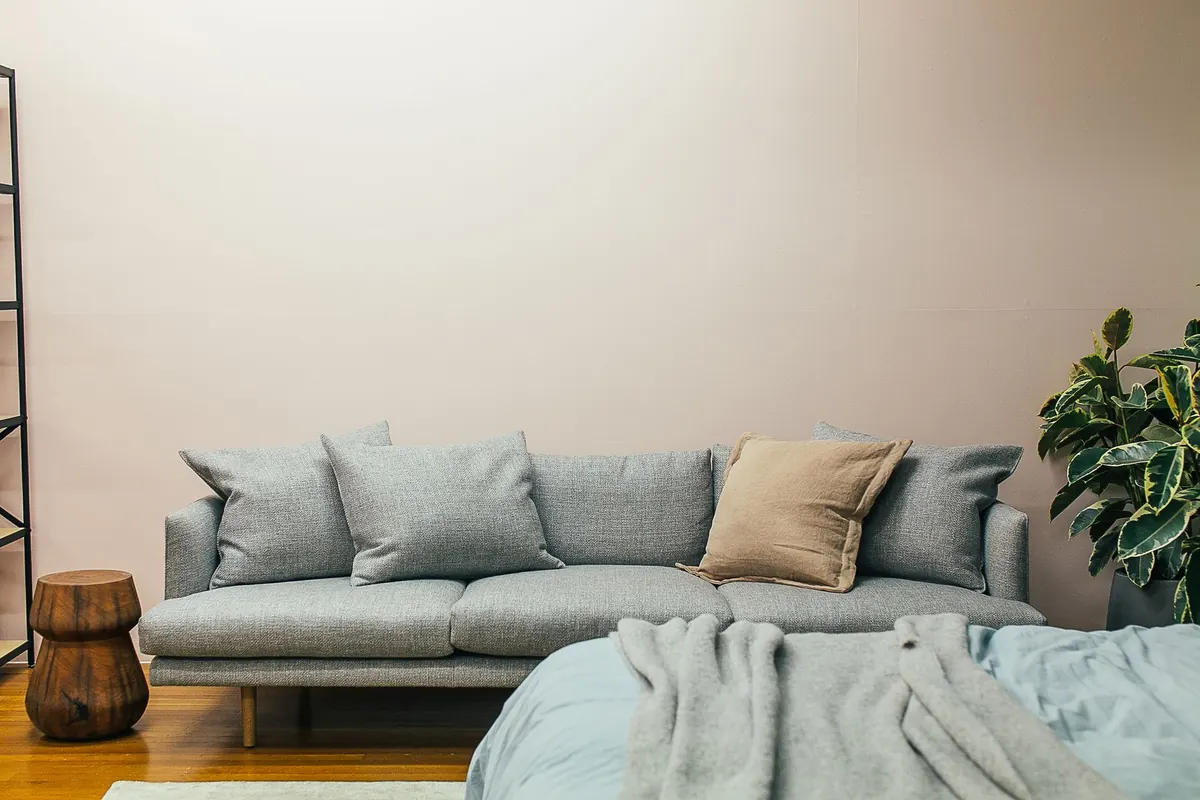
Photo: Rachel Claire / Pexels

You Might Also Like
Late-summer wildflowers peak in wet meadows, rail trails and utility corridors near home. Here's how to find them, time your visit and walk them well.
A practical first-timer's guide to day hiking: choosing a trail that fits you, layering for changing weather, and packing a day pack with the right essentials.